Press & media kit
Everything you need to cover Open & Async — fact sheet, bios, imagery, and story angles. For interviews, review copies, or anything else, email press@open-and-async.com.
The one-liner
The opinionated, GitHub-tested playbook for engineers and the managers who lead them — because most companies didn’t go remote, they just digitized the office.
About the book
Working from home ≠ working remotely. Your company shipped everyone a laptop, bolted Zoom onto the same approval chains, and called it remote work. It wasn’t. It was office work in sweatpants — same meetings, same status theater, same hallway politics, just piped through a webcam.
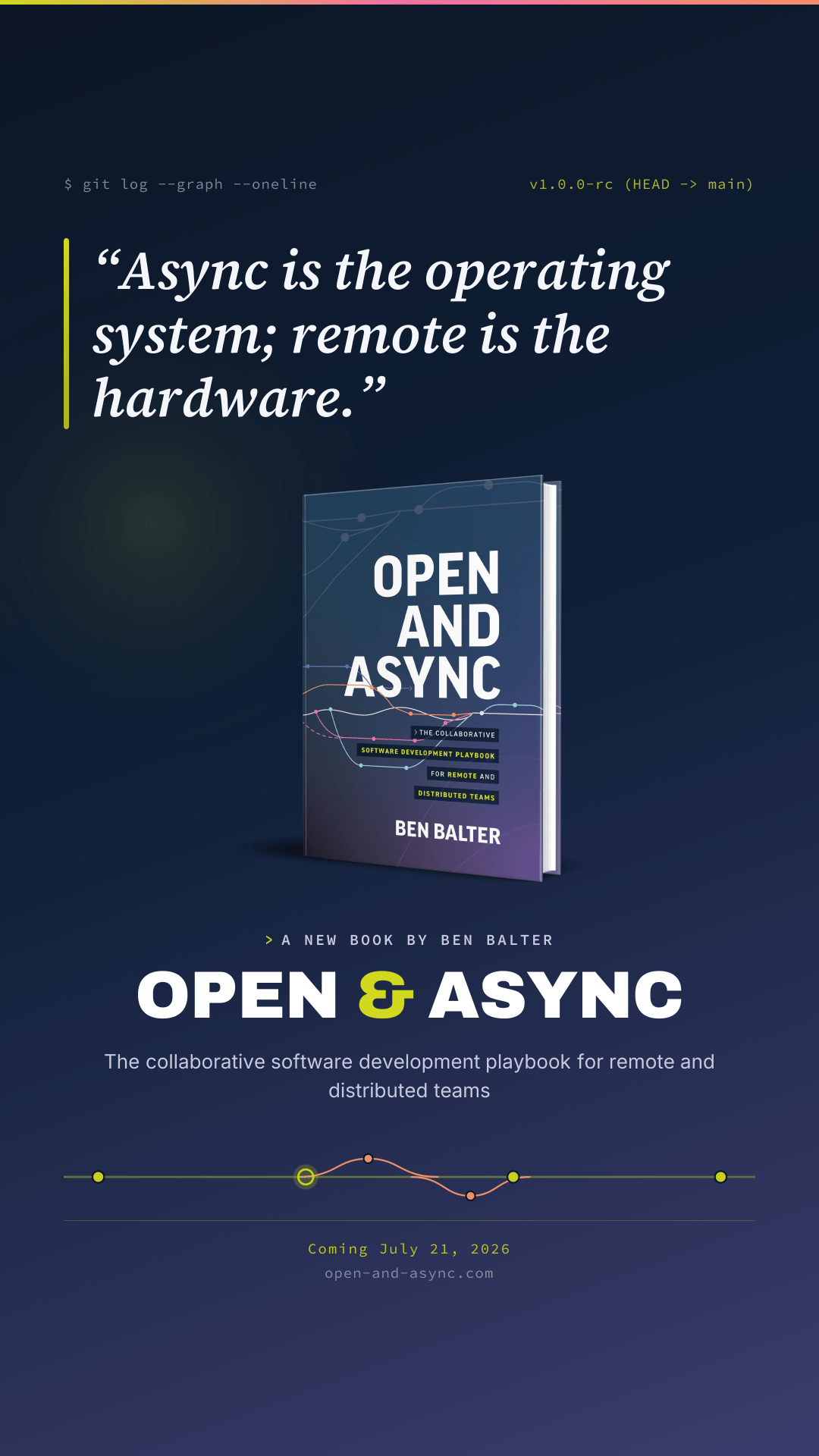
Drawn from more than a decade at GitHub — remote-first since before it was fashionable — Open & Async is the opinionated, practical playbook for the two practices that make distributed work actually work: working in the open and communicating asynchronously. Async is the operating system; remote is the hardware.
Unlike generic remote-work books, Open & Async is engineering-rooted, strongly opinionated, and written for both people-managers and the individual contributors they work with. It pulls from GitHub’s actual playbook — the practices, not the marketing — and translates them for any team that doesn’t share an office. Written to be used, not shelved.
Fact sheet
- Title
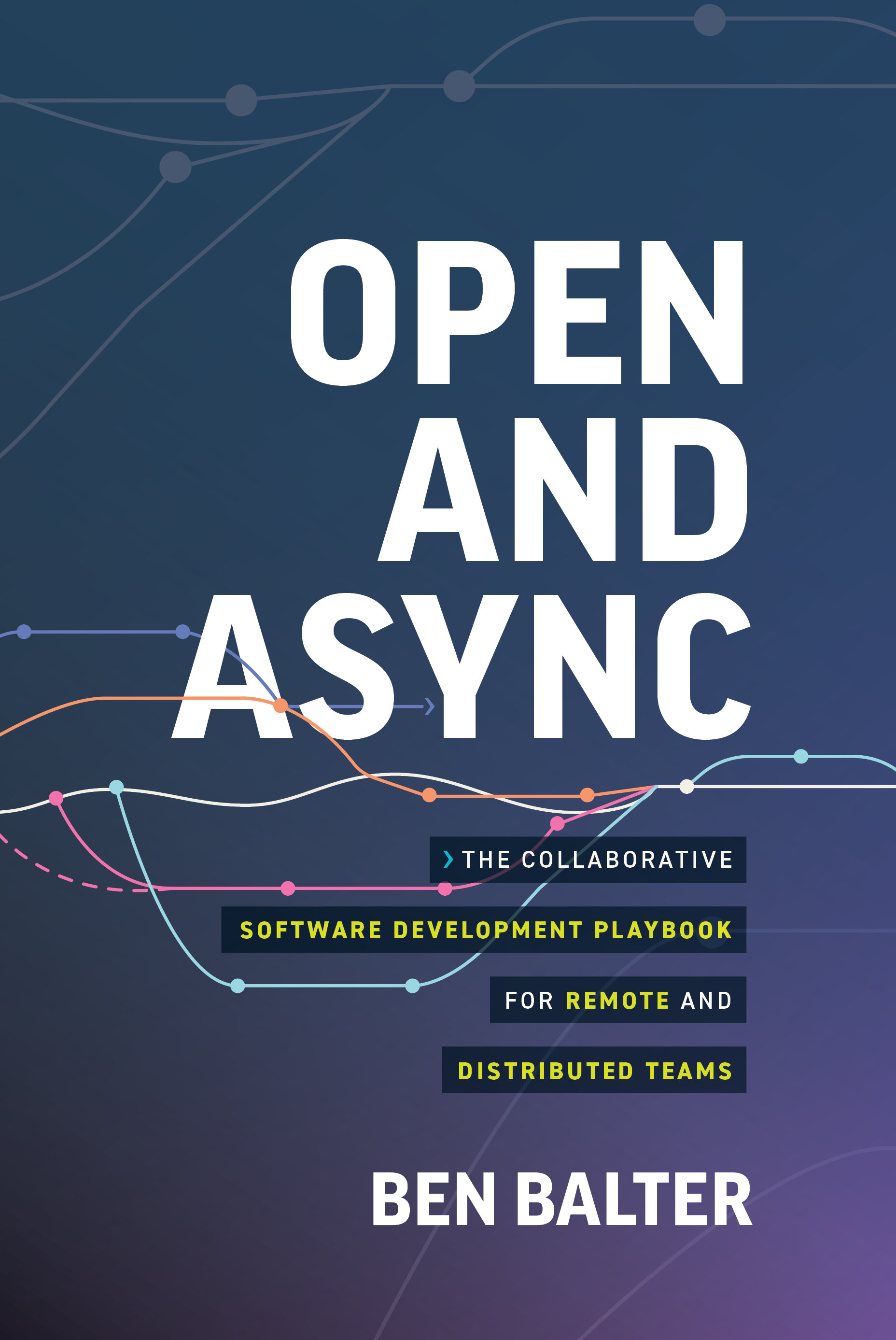
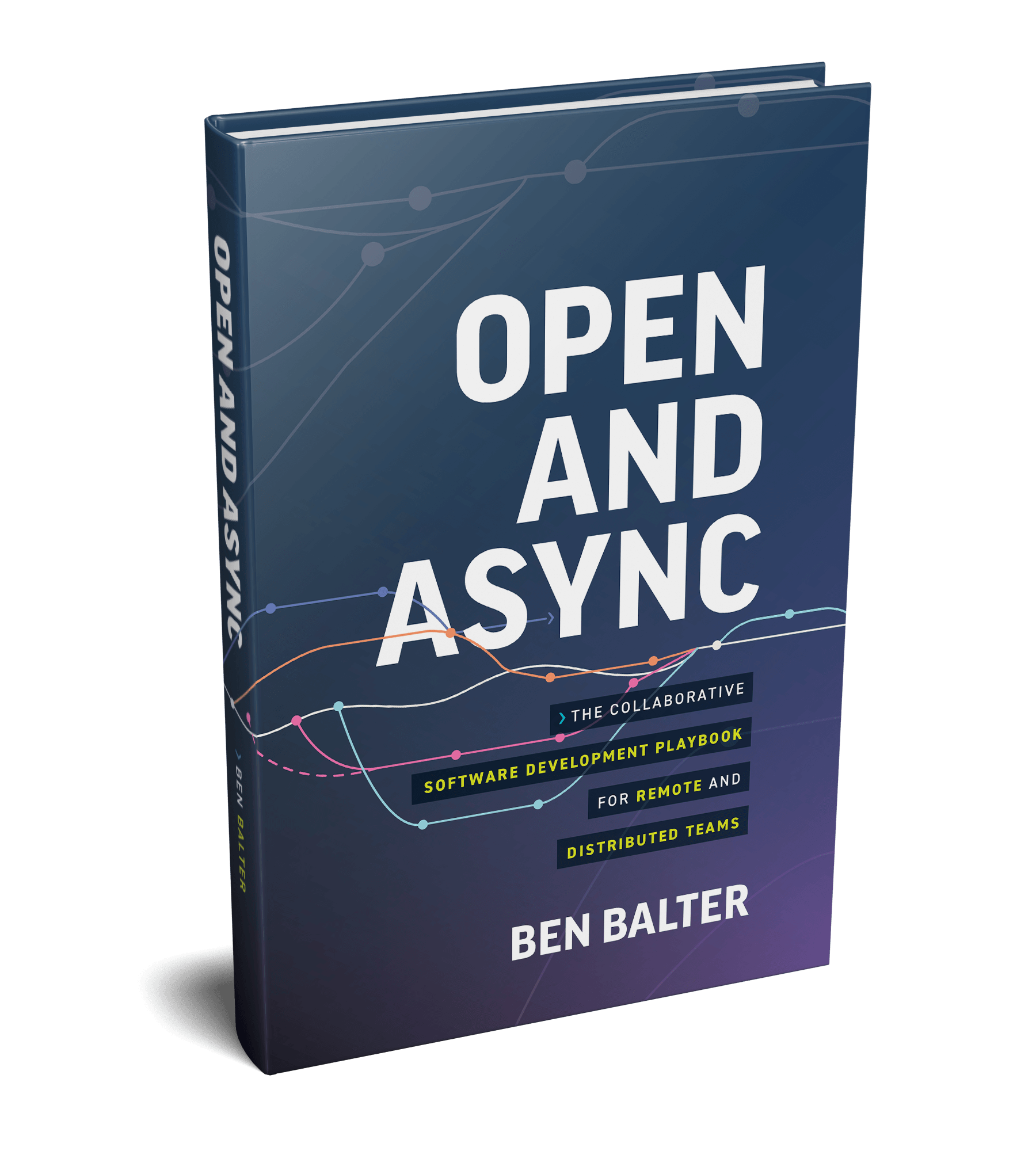
- Open and Async: The collaborative software development playbook for remote and distributed teams
- Author
- Ben Balter
- Publisher
- Open & Async LLC
- Publication
- July 21, 2026
- Ebook
- $9.99 · ISBN 979-8-9957542-0-6
- Paperback
- $29.99 · 6×9″ · 576 pages · ISBN 979-8-9957542-1-3
- Audiobook
- $14.95 · ~11.5 hrs · Synthetic (AI) narration · ISBN 979-8-9957542-3-7
- Categories
- Business & Economics / Leadership · Organizational Behavior · Computers / Software Development & Engineering
- Availability
- Available now: Amazon, Apple Books, Kobo, Barnes & Noble, and bookstores via Ingram. Audiobook on Audible, Libro.fm, Apple Books, Spotify, Kobo & Google Play
Audiobook (synthetic (ai) narration) at open-and-async.com/listen.
Open & Async is an independent work, not affiliated with or endorsed by GitHub, Inc.
Where to buy
About the author
Short bio (podcast intro)
Ben Balter spent over a decade at GitHub, most recently as Director of Hubber Enablement, where he helped thousands of GitHubbers do their best remote work. A former Presidential Innovation Fellow and GitHub’s first Government Evangelist, he has spent nearly two decades building software across open-source, government, and large engineering organizations. He writes at ben.balter.com.
Full bio
Ben Balter spent over a decade at GitHub, most recently as Director of Hubber Enablement, where he helped thousands of GitHubbers do their best remote work. He has spent his career trying to figure out how large engineering organizations actually work — and why the obvious answers are usually wrong.
Earlier at GitHub, Ben led Technical Business Operations for Engineering, served as Chief of Staff for Security, and oversaw GitHub’s enterprise offerings as a Staff Technical Program Manager. Earlier, in Trust and Safety, he shipped more than 500 features for a platform with over 100 million developers.
Ben was GitHub’s first Government Evangelist and a member of the inaugural class of Presidential Innovation Fellows, where he helped draft parts of President Obama’s Digital Strategy and Open Data Policy. A lawyer and technologist, he holds a J.D. and an M.B.A. from The George Washington University. He writes at ben.balter.com.
Story angles
Conversation starters for interviews, podcasts, and features:
-
Most companies never went remote
They digitized the office — bolted video calls onto the same org chart and called it remote. The difference between working from home and working remotely.
-
Async is the operating system; remote is the hardware
Why distributed teams that win treat asynchronous communication as the foundation, not an accommodation.
-
Meetings as escalation, not default
When to write, when to call, and how teams reclaim the hours lost to “quick syncs.”
-
Every decision deserves a URL
How context survives reorgs, departures, and chat-history purges — and why engineers solved this first.
-
Working loudly
Making impact visible without performing busyness — and getting promoted on outcomes, not optics.
-
A decade inside GitHub
What the company that pioneered remote-first software development got right — and wrong.
Looking for pull quotes? Every line on the quotes page has its own permalink and share card.
Downloads
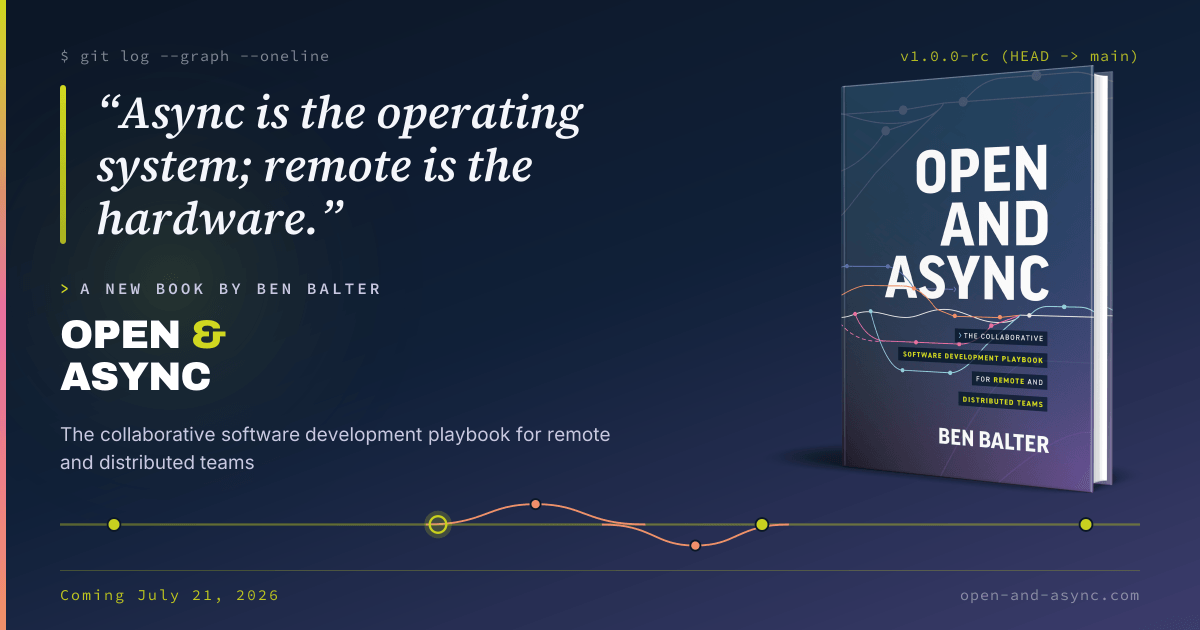
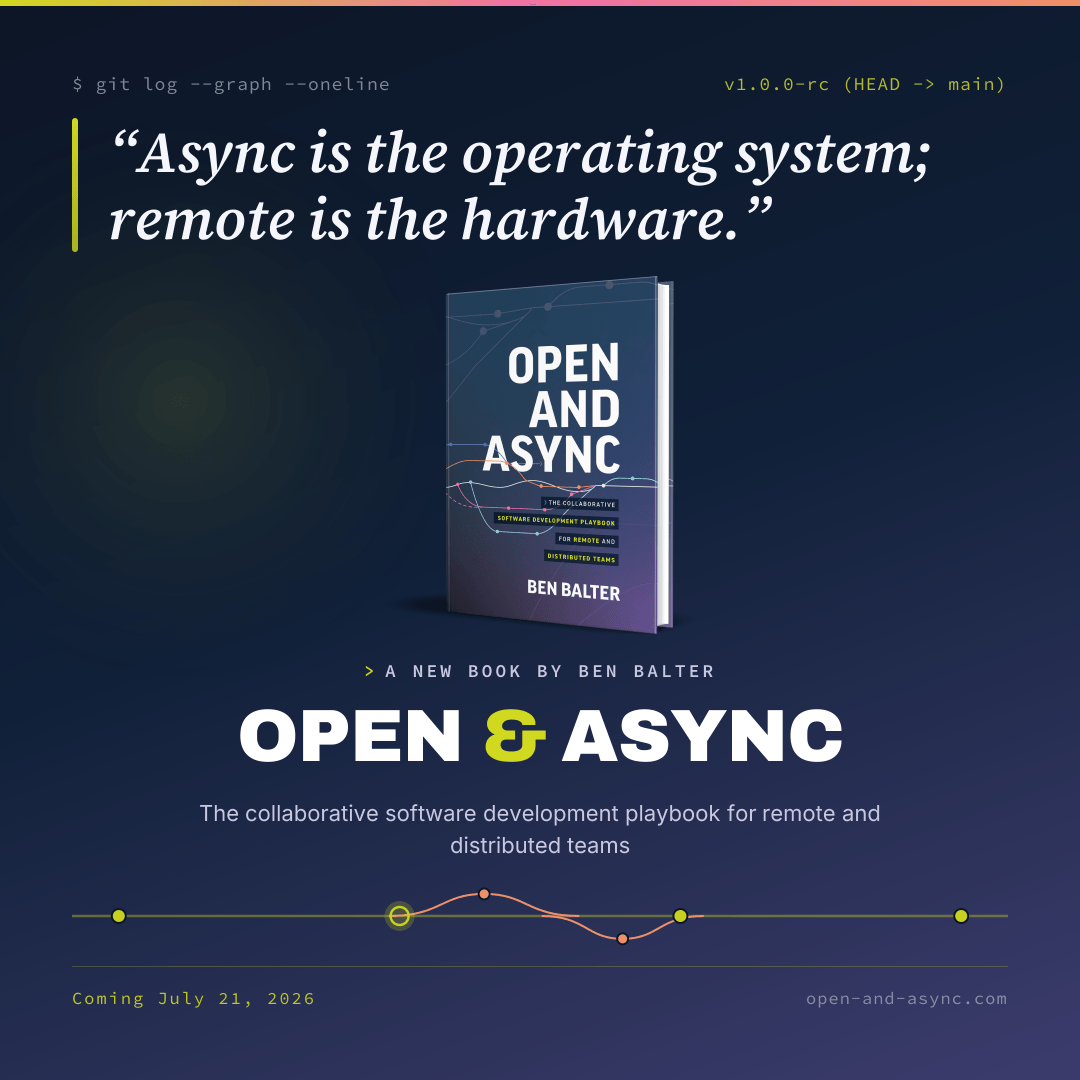
Imagery is free to use for coverage of the book. Higher-resolution assets available on request.

Media contact
Interview requests, review copies, excerpt permissions, and everything else: press@open-and-async.com